20+
Years Of Experience
Buildings That Support Real Farm Operations
Pole Barns in Abilene for equipment storage, feed protection, and livestock shelter
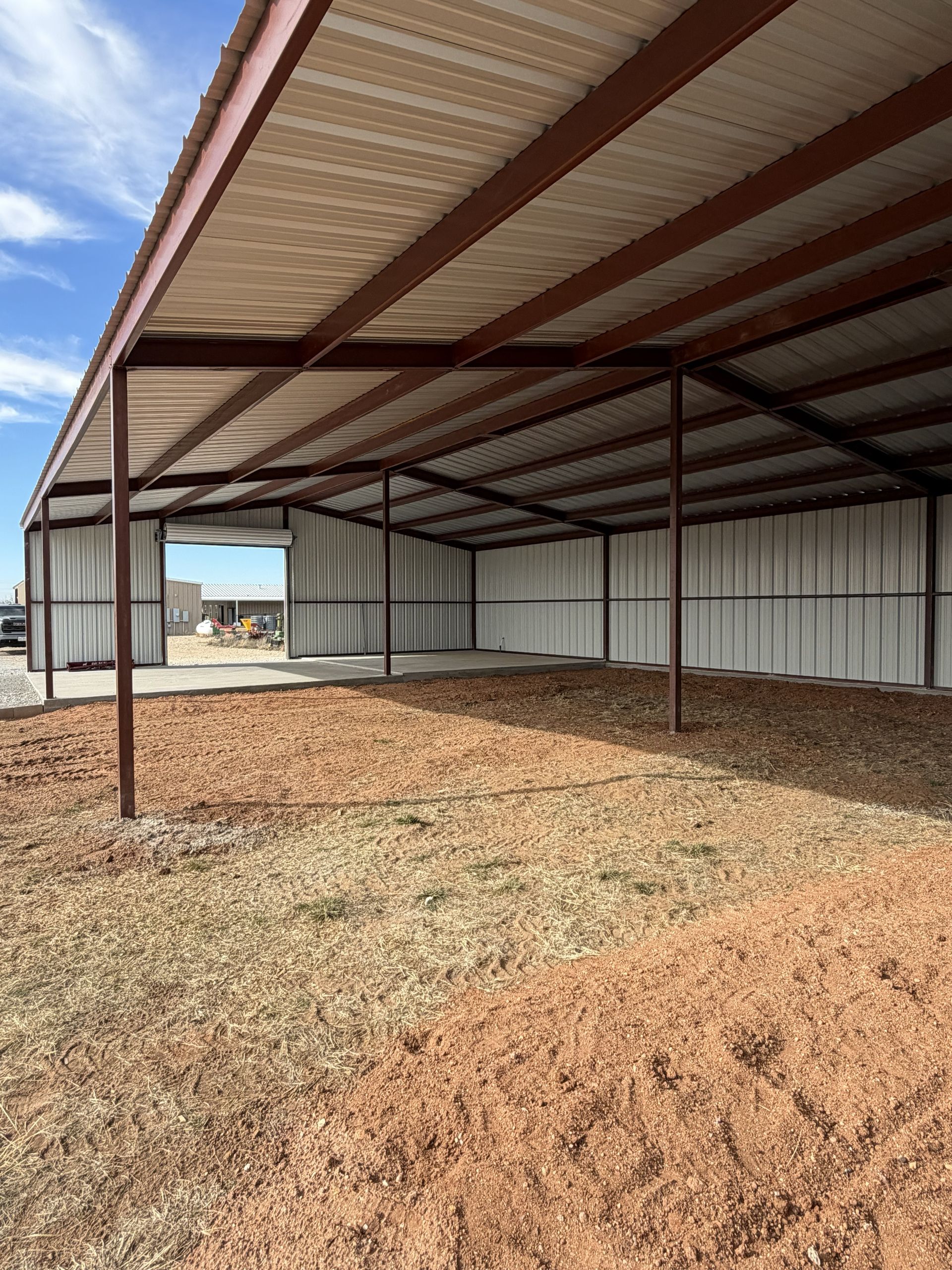
Elam Construction builds pole barns in Abilene and Clyde for landowners who need functional space that handles daily agricultural use. Post-frame construction creates large open spans without interior columns, allowing you to move equipment, stack hay bales, or house livestock without navigating around structural obstacles. The post-and-beam framework transfers roof loads directly into the ground through embedded posts, which means fewer materials and faster construction compared to conventional framed buildings.
The design uses vertical posts anchored into the ground as the primary structural system, with horizontal girts connecting them to support metal siding and roofing. This method works well for agricultural applications because it provides wide, uninterrupted floor space and adapts to different layouts—whether you need drive-through access for tractors, partitioned areas for feed storage, or enclosed sections for livestock during severe weather.
Schedule a property evaluation to determine the most practical layout and placement for your operation.
Why Post-Frame Construction Works for Agricultural Use
Post-frame buildings resist wind loads effectively because the embedded posts act as deep foundation elements that anchor the structure against lateral forces common in open rural areas. The metal roofing and siding shed rain and hail without requiring frequent maintenance, and the open-bay design means you can reconfigure interior spaces as your storage or sheltering needs change over time.
Once the building is complete, you'll have protected space that keeps equipment dry, prevents feed spoilage from rain exposure, and gives livestock a sheltered area during storms. The roof overhang can be extended on one or more sides to create covered work zones or additional weather protection without enclosing the entire perimeter. Elam Construction sizes each pole barn based on the equipment dimensions, livestock capacity, or storage volume you specify, ensuring door widths and ceiling heights accommodate your largest machinery or tallest loads.
The construction process moves faster than conventional framing because fewer foundation components are required and the structural posts also serve as wall framing. Placement on your property depends on drainage patterns, access routes for large vehicles, and proximity to existing structures, all of which affect how efficiently you can use the building once it's finished.
What Landowners Typically Want to Know
These questions come up frequently when planning agricultural structures and open-span buildings for working properties.
What size pole barn do I need for standard farm equipment?
Building width and door height depend on your largest piece of equipment—a combine, hay trailer, or tractor with a front loader—since clearance on all sides prevents damage when maneuvering inside, and most landowners add at least two feet to the equipment's width and height measurements to allow room for safe entry and exit.
How does post-frame construction handle wind in Abilene?
The embedded posts extend several feet below grade and act as anchors that resist uplift and lateral movement, which is critical in open rural areas where wind speeds increase without buildings or trees to create windbreaks, and the continuous metal roofing panels are fastened with screws rather than nails to prevent panel separation during high winds.
Can I partition sections inside a pole barn?
Interior walls can be added at any time using wood framing or metal panels attached to the girts, allowing you to create separate areas for feed storage, tool organization, or enclosed livestock pens without altering the structural system.
What foundation work is required before construction?
Post holes are augered or excavated to the required depth, and gravel is placed at the bottom for drainage before the posts are set and backfilled, while the remainder of the floor can be left as compacted dirt, gravel, or poured concrete depending on how you plan to use the space.
How long does a pole barn last in outdoor agricultural conditions?
Treated posts resist ground contact decay for decades, and metal roofing and siding withstand sun, rain, and temperature swings without warping or cracking, so the building typically requires only occasional fastener tightening and minor panel repairs over its lifespan.
Elam Construction plans each pole barn to fit your property layout and operational needs, from equipment access to livestock capacity. Request a detailed estimate based on the specific dimensions and features your farm requires.