20+
Years Of Experience
Structures That Combine Living and Working Space
Barndominiums in Abilene for rural homes, multi-use buildings, and flexible property solutions
Barndominiums in Abilene for landowners who need housing and storage in one durable structure
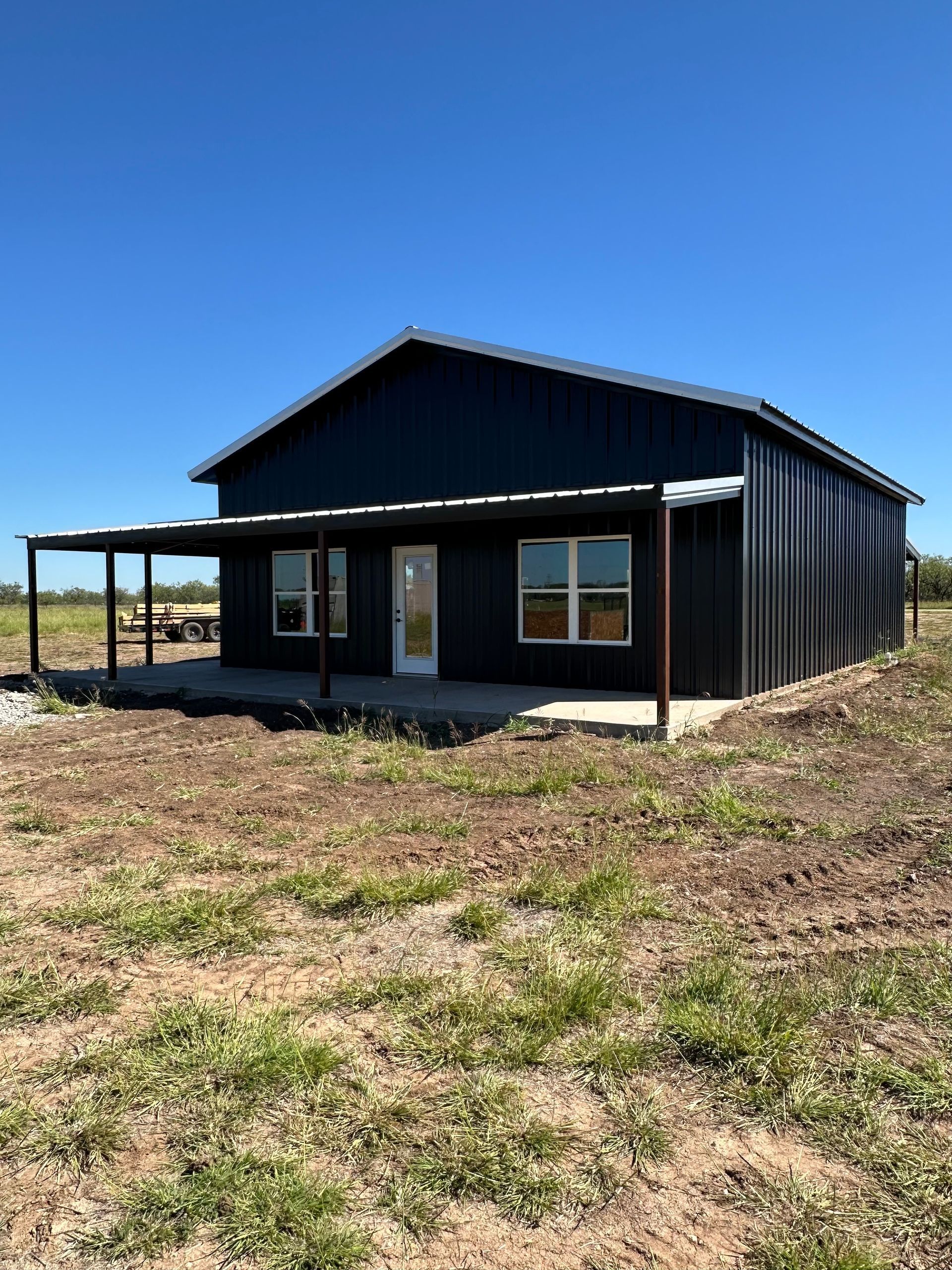
A barndominium combines residential living areas with workshop, storage, or agricultural space under one roof, using metal construction for the exterior shell and conventional framing for interior walls and living quarters.
Elam Construction builds these structures for landowners around Abilene and Clyde who want the efficiency of a single building that houses both family and farm operations, eliminating the need for separate shop and residential structures. The metal exterior withstands wind, hail, and sun exposure without the frequent painting or siding repairs that traditional homes require, while the interior can be finished to residential standards with insulation, drywall, plumbing, and electrical systems.
The design process divides the building into climate-controlled living space and unfinished or minimally finished work areas, with the layout adjusted to fit your specific needs—whether that's a two-bedroom apartment above a workshop, a full house on one end with equipment storage on the other, or living quarters in the center with shop space on both sides. The metal framework allows large open spans without load-bearing interior walls, so you can configure rooms and storage areas without structural constraints.
Schedule a project planning session to discuss layout options and the balance between living space and functional work areas.
What Barndominium Construction Involves
The building starts with a concrete slab foundation that supports both the living quarters and the work areas, providing a level, durable floor throughout the structure. The metal framework goes up using the same post-and-beam methods as pole barns, but with additional engineering for residential loads and insulation requirements. Interior walls are framed with wood studs in the living sections, creating cavities for plumbing, electrical wiring, and insulation, while the shop or storage areas can remain open or be minimally partitioned depending on how you plan to use them.
Once construction is complete, you'll have a home that requires less exterior maintenance than wood-sided houses and a workspace that accommodates vehicles, tools, and equipment without needing a separate building. The living area stays climate-controlled year-round, while the shop section can be heated or cooled as needed, or left unfinished to reduce utility costs. Large doors provide vehicle access to the work areas, and standard residential doors connect the living quarters to the rest of the building for internal access.
Barndominiums are popular on larger rural properties where zoning allows mixed-use buildings, and the design can include features like covered porches, loft storage above living areas, or drive-through bays for equipment. The metal roof and siding come in multiple colors, allowing the building to match your aesthetic preferences while still providing the durability and low maintenance that metal construction offers.
Questions Landowners Ask About Barndominiums
Property owners considering this type of structure typically have questions about layout, costs, and how the building functions for both residential and working purposes.
How is living space separated from work areas inside a barndominium?
Interior walls with insulation and drywall create a thermal and sound barrier between climate-controlled living quarters and unfinished shop or storage space, and doors between the two areas can be insulated and weatherstripped to prevent drafts and noise transfer.
What utilities are required for a barndominium?
Residential sections need full plumbing, electrical service, and HVAC systems just like a traditional home, while work areas typically require only electrical outlets and lighting unless you plan to add a bathroom, sink, or climate control in the shop space.
Can a barndominium be financed like a traditional home?
Financing depends on the lender's policies and how much of the building is designed as living space versus agricultural or workshop use, and some lenders treat barndominiums as commercial or mixed-use properties, which may require different loan products than standard residential mortgages.
How much does a barndominium cost compared to building a house and a shop separately?
Combining both functions under one roof reduces foundation costs, roofing expenses, and site preparation work compared to constructing two separate buildings, and the metal exterior typically costs less per square foot than traditional siding and roofing materials, though interior finish costs for the living area remain similar to conventional home construction.
What size barndominium works for a family and typical farm equipment?
Total square footage depends on how many bedrooms and bathrooms you need in the living area and how much clearance your largest equipment requires in the shop, but many landowners build structures ranging from 2,000 to 4,000 square feet, with roughly half dedicated to living space and half to work or storage areas.
Elam Construction plans barndominiums to match your property's intended use and your family's living requirements, from floor plan layout to material selection. Request a consultation to review design options and construction details for your rural property.