
20+
Years Of Experience
Shelter That Protects Livestock Year-Round
Loafing Sheds in Abilene for pasture protection from sun, wind, and precipitation
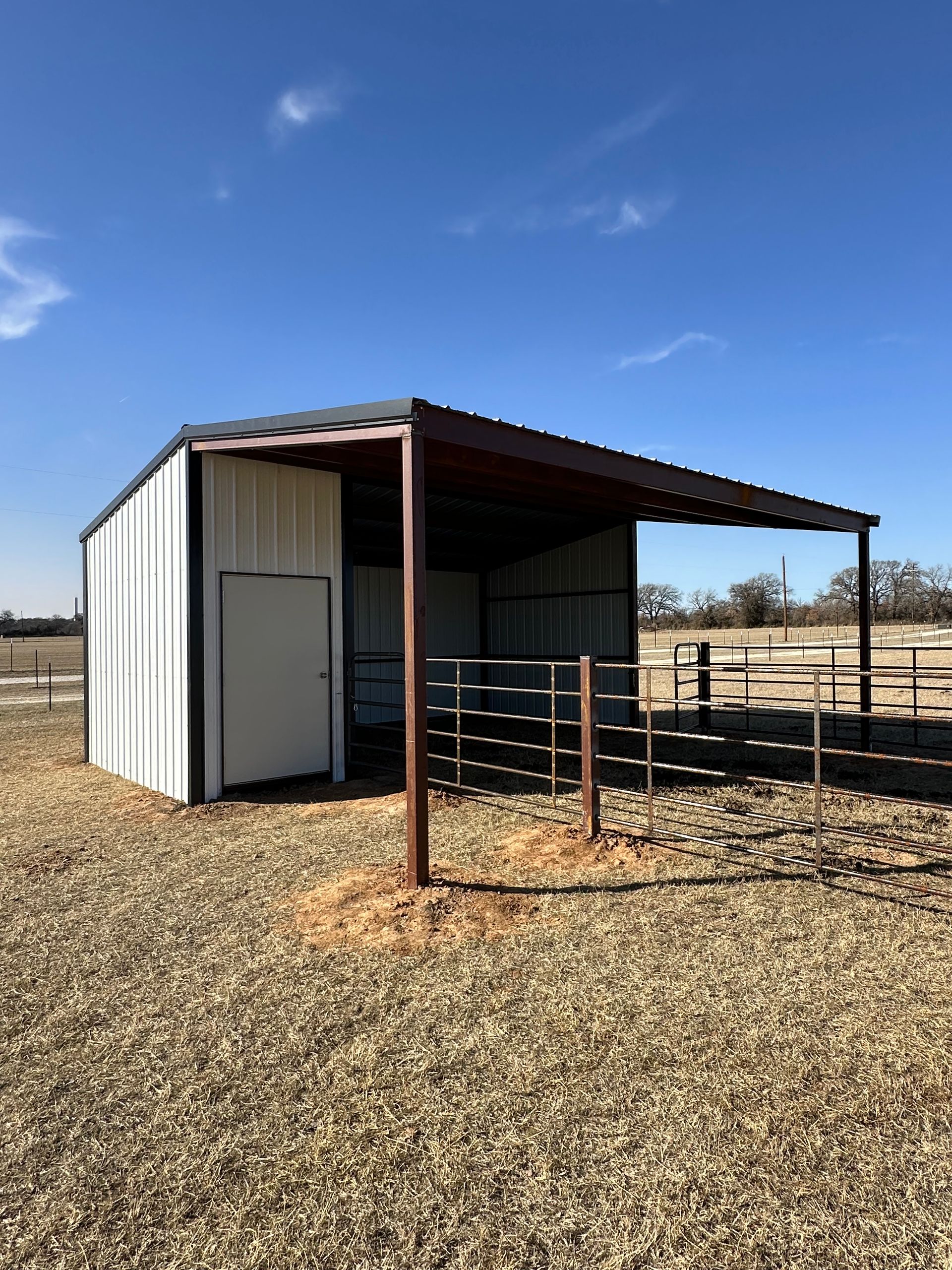
Livestock in open pastures around Abilene face intense summer heat, sudden thunderstorms, and winter winds that cross the rolling terrain without obstruction. Elam Construction builds loafing sheds that provide shade and weather coverage in the locations where your animals naturally gather, reducing heat stress and keeping them dry during storms. The simple three-sided or fully open design allows animals to enter and exit freely while the roof and windbreak walls block the most severe conditions.
These structures use the same post-frame construction as pole barns, with vertical posts anchored into the ground and a metal roof that sheds water away from the sheltered area. The open front or sides allow airflow, which prevents moisture buildup and keeps bedding dry, while the back and side walls block prevailing winds and driving rain.
Arrange an on-site consultation to identify the best placement and orientation for wind protection and drainage.
What Proper Livestock Shelter Requires
Loafing shed placement matters as much as construction—the structure should sit on higher ground where rainwater drains away naturally, and the open side should face away from prevailing winds to keep the interior dry during storms. The roof pitch must be steep enough to prevent water pooling and to shed debris like leaves or small branches that blow in during high winds.
After the shed is built, you'll see livestock move into the shaded area during midday heat and gather inside when rain begins, which reduces the stress that leads to weight loss or illness in cattle, horses, and goats. The covered ground stays drier than open pasture, so animals avoid standing in mud, and the roof overhang can extend several feet beyond the walls to create additional dry space during angled rain. Elam Construction sizes each loafing shed based on the number of animals and their typical spacing requirements, ensuring adequate room without overcrowding.
The structure itself requires minimal maintenance—metal roofing lasts for decades without replacement, and treated posts resist rot even when exposed to manure and wet ground. Some landowners add optional features like feed troughs mounted to the interior posts or gates across the open side to temporarily contain animals for sorting or veterinary care.
Questions About Livestock Shelter Planning
Ranch and farm owners often ask these questions when planning shelters for animals in open pastures.
How much space does each animal need inside a loafing shed?
Cattle typically require 40 to 60 square feet per head to avoid crowding, while horses need slightly more room to move comfortably, and goats or sheep can use less space, so total square footage depends on herd or flock size and whether animals will use the shelter simultaneously or in shifts throughout the day.
Should the loafing shed be fully enclosed or open on multiple sides?
Fully open designs provide maximum airflow and prevent ammonia buildup from manure, but areas with strong prevailing winds benefit from one or two enclosed sides to block rain and wind while still allowing animals to enter and exit freely on the remaining sides.
What direction should the open side face?
Positioning the open side away from prevailing winds keeps rain from blowing into the shelter, and in Abilene's climate, this usually means facing the opening east or southeast to block the most common storm directions while allowing morning sun to dry wet ground inside the structure.
Can a loafing shed be moved after construction?
Post-frame structures are designed to remain in place once built, since the embedded posts anchor the building to the ground, but the relatively simple construction means a new shelter can be added elsewhere on the property if pasture rotation or herd relocation requires different placement.
How high should the roof be for adequate ventilation?
Roof height at the peak should be at least 10 to 12 feet to allow warm air to rise above the animals and escape, which reduces heat buildup during summer and prevents condensation during cooler months when temperature differences between inside and outside air are greatest.
Elam Construction designs loafing sheds to match your property's wind patterns, drainage conditions, and herd size. Request a planning session to review placement options and structural specifications for your livestock needs.