
20+
Years Of Experience
Outdoor Spaces Built for Daily Use
Deck Construction in Abilene for backyards, entertaining areas, and expanded living space
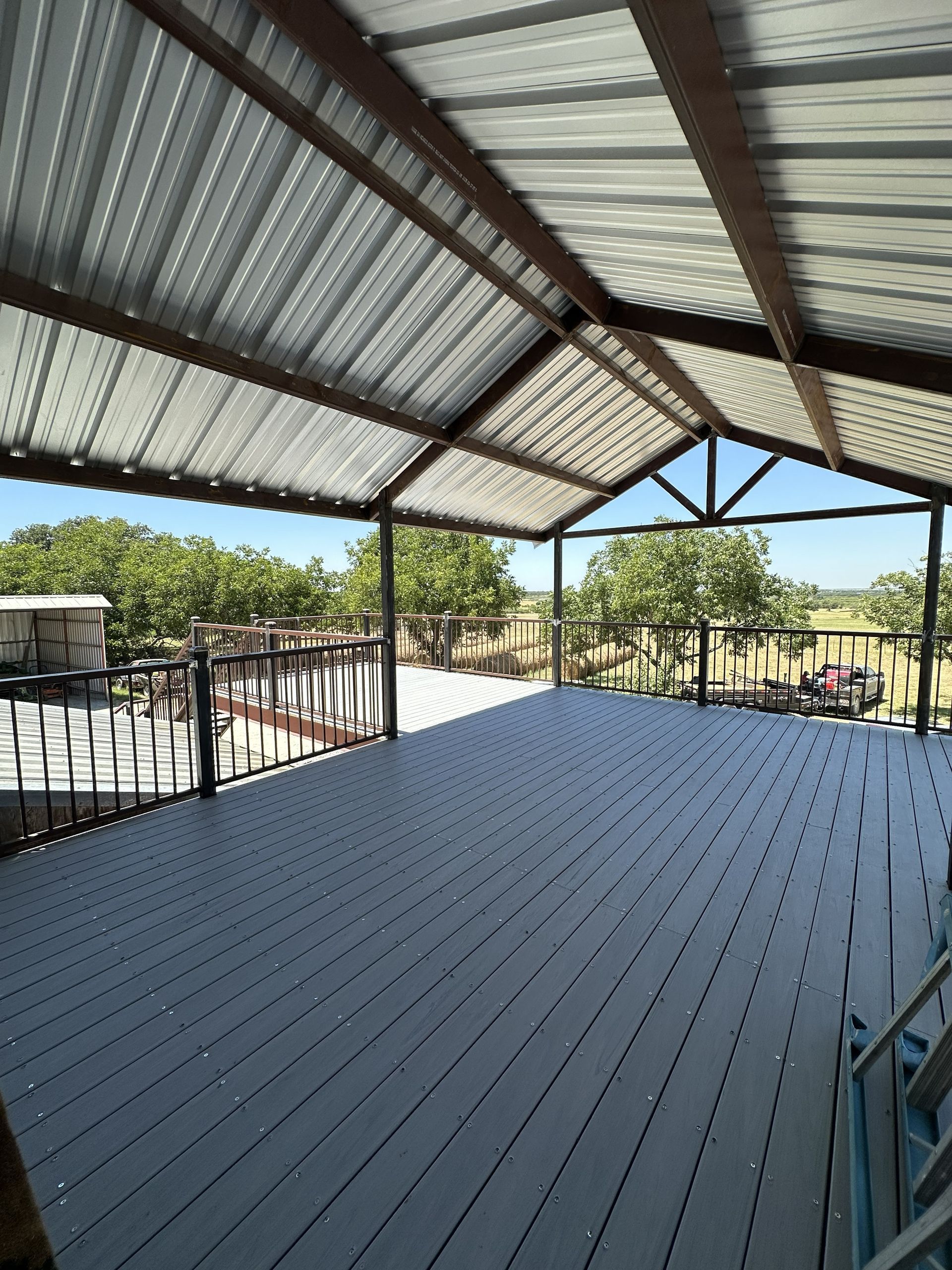
Wood and composite materials expand and contract with Abilene's temperature swings, and deck boards that aren't properly fastened or spaced will cup, split, or pull loose from the joists within a few seasons. Elam Construction builds custom decks with framing that accounts for these movements and fastening methods that hold boards in place while allowing the natural expansion that occurs when humidity changes. The deck becomes an extension of your home's usable space, creating a stable surface for furniture, grills, and foot traffic without the maintenance demands of a ground-level patio.
The construction starts with footings and posts that support the deck frame independent of the house foundation, preventing settling or movement that would stress the ledger board attachment. Joists are spaced to prevent bounce underfoot, and the decking material is installed with gaps that allow water to drain and air to circulate, reducing moisture buildup that leads to rot or mildew.
Arrange a planning session to review size, height, and material options for your backyard layout.
How Decks Are Built for Long-Term Durability
Deck framing uses pressure-treated lumber for all ground-contact and structural components, with galvanized or coated fasteners that resist corrosion when exposed to rain and morning dew. The ledger board attaches to the house with through-bolts or lag screws, and flashing is installed above it to direct water away from the connection point, preventing the rot that occurs when water seeps behind the board and saturates the wall sheathing.
After construction, you'll have a level outdoor surface that drains water between the deck boards and dries quickly after rain. The railing height meets code requirements for safety, and the spacing between balusters prevents small children or pets from slipping through. Stairs connect the deck to ground level with treads deep enough for comfortable footing and risers consistent in height to prevent tripping. Elam Construction can incorporate built-in benches, planter boxes, or pergola structures into the deck design, adding functionality without requiring separate foundations or framing systems.
Material choice affects how much maintenance you'll perform—wood decking requires staining or sealing every few years to prevent weathering, while composite materials resist fading and splintering but cost more initially. The deck's height above grade determines whether skirting is needed to block animals from nesting underneath and whether stairs require handrails in addition to the main deck railing.
Answers to Common Deck Planning Questions
Homeowners preparing to add outdoor living space usually ask these questions about deck construction and material selection.
What size deck makes sense for a typical backyard?
Deck size depends on how you plan to use the space—a dining table and chairs require at least 12 by 14 feet, while seating areas with a grill and lounge furniture often need 16 by 20 feet or more, and the yard's dimensions and door placement affect where the deck can be positioned without blocking windows or access paths.
How high can a deck be built without additional structural support?
Decks more than 30 inches above grade typically require additional bracing or blocking between posts to prevent lateral sway, and any deck over a certain height may require a building permit and inspection to verify that the framing meets load requirements for live and dead weight.
What's the difference between wood and composite decking in Abilene's climate?
Wood decking absorbs moisture and expands during humid periods, then contracts and can crack during dry heat, requiring regular sealing to slow this cycle, while composite materials resist moisture absorption and stay dimensionally stable but can retain heat underfoot on sunny days.
Can a deck be built on uneven or sloped ground?
Post heights are adjusted to create a level deck frame regardless of ground slope, with taller posts on the downhill side and shorter posts on the uphill side, and this approach works for moderate slopes without requiring grading or retaining walls.
How much maintenance does a deck require after construction?
Wood decks need cleaning and resealing every two to three years to prevent moisture damage and UV fading, while composite decks require only occasional washing to remove dirt and pollen, and all decks benefit from annual fastener checks to tighten any screws or bolts that loosen over time.
Elam Construction designs decks to fit your home's layout and your outdoor living plans, from material selection to railing style. Request a detailed project estimate based on your yard's dimensions and your intended use of the space.